Key Takeaways
- June through September is statistically the cheapest time to book a move in Altamonte Springs, but you need a weather contingency plan baked into your contract before you sign anything.
- Waterproof wrapping, plastic bins over cardboard boxes, and same-day crating decisions can mean the difference between a dry move and thousands in water-damaged furniture.
- Know exactly when to reschedule versus push through a storm: tropical storm watches are a hard stop, but afternoon pop-up thunderstorms on 436 Semoran are usually a 45-minute delay.
- Check your homeowners or renters insurance for transit coverage gaps before move day, not after a soaked box of documents reminds you that you forgot to.
Hurricane season runs June 1 through November 30 in Florida, and for Altamonte Springs residents, that window overlaps almost perfectly with summer moving season. The irony is real: the cheapest time to hire a moving crew is also the time when a named storm can spin up in the Gulf with 72 hours of notice. So you get a deal, but you’re playing weather roulette.
I’ve been moving families across Seminole County for 19 years, and every summer I see the same split: residents who planned for a storm delay come out fine, and residents who assumed Florida weather would cooperate end up with warped furniture and a rescheduling headache. The gap between those two groups isn’t luck. It’s preparation.
This guide breaks down how to time your move smartly, protect your belongings when a storm rolls in from the coast, and fill the insurance gaps that most people don’t discover until it’s too late. If you’re doing a local move to or within Altamonte Springs, this is the planning checklist you need before you call anyone.

Why Summer Is Actually the Cheapest Moving Window
Most people assume summer is peak moving season everywhere. In Florida, it’s more complicated. Yes, families with school-age kids tend to move in June and July. But the snowbird effect runs in reverse here: the November and April windows, when half of New England is landing at Orlando International, drive prices up fast. A 2-bedroom local move in Altamonte Springs that runs $650 to $850 in late July can jump to $950 to $1,200 in early May when demand spikes.
The real price floor is late August and September. Fewer people want to move during the statistical peak of hurricane season, so crew availability is high and booking competition is low. If you’re flexible and your new lease or closing date allows it, a move on a Tuesday or Wednesday in mid-August can save you $200 to $300 compared to a Saturday in April.
The catch: you need a rescheduling clause in your moving contract. Before you book any crew for a summer move, ask specifically what happens if a named storm forces a delay. Most reputable moving companies won’t charge a cancellation fee for a weather postponement, but get it in writing. Some crews will hold your deposit for a reschedule; others will refund it outright if a watch is issued. Know which one you’re dealing with before deposit day.
Also worth knowing: Saturday moves on 434 and 436 during July are brutal. The road traffic between Longwood and Casselberry peaks on summer weekends, and a 6-mile move can eat an extra 45 minutes of billable time just in transit. Mid-week moves on those corridors run noticeably smoother.
Protecting Your Belongings During Sudden Storms
Central Florida afternoon thunderstorms are not gentle. Between June and September, a clear morning on Cranes Roost can turn into sideways rain by 2 PM with no meaningful warning. If your crew is mid-load when that happens, the decisions made in the next five minutes determine whether your furniture survives intact.
Here’s what actually works:
- Ditch cardboard for plastic bins on anything moisture-sensitive. Books, documents, electronics, and clothing packed in cardboard boxes absorb water fast in high-humidity conditions. Plastic bins with locking lids are a one-time investment you can reuse. If you’re renting bins, most moving companies in the area offer them for $3 to $5 per bin per day.
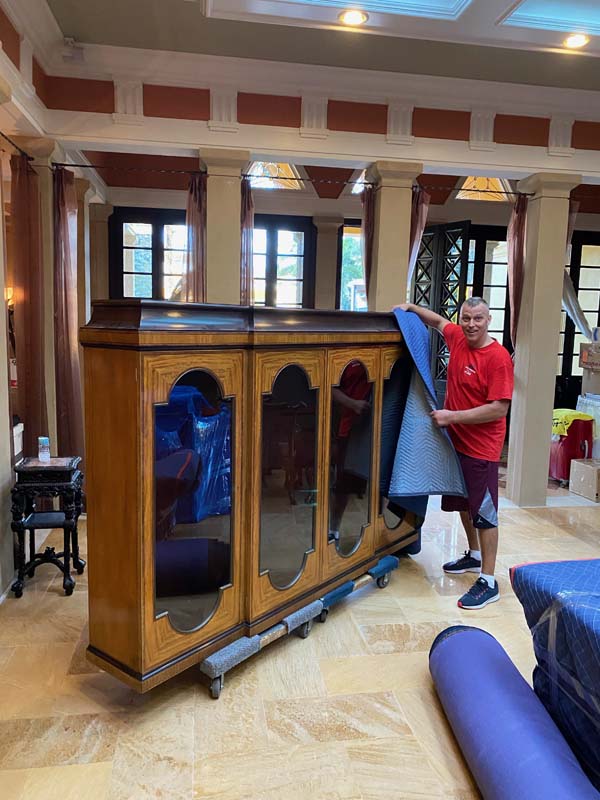
- Shrink-wrap all upholstered furniture before it leaves the house. A couch wrapped in shrink and moving blankets can survive a 10-minute downpour during loading. An unwrapped couch moved at a jog under a moving blanket gets soaked through the cushions every time.
- Stage boxes and furniture inside the truck door, not on the driveway. A practiced crew will keep the truck door open only when items are actively being loaded, closing it between trips. If you see boxes sitting on your driveway while the crew is inside grabbing more, say something.
- Keep electronics and documents in a waterproof duffel in your own vehicle. Don’t load your laptop, external drives, or closing paperwork into the moving truck. They ride with you, full stop.
I had a customer in the Wekiva Springs area two summers ago who called us the morning of her move worried about an incoming storm band. We wrapped every piece of upholstered furniture in two layers of shrink before it left the front door, moved the electronics to her car, and loaded the heavy wood furniture first so it anchored the load. The storm hit hard for about 20 minutes during the unload. Total damage: zero. She sent us a five-star review that mentioned the shrink wrap specifically. It’s not glamorous, but it works.
When to Reschedule vs. Push Through
This is the question I get more than any other during summer moves. The honest answer depends on what type of weather you’re dealing with.
Push Through: Afternoon Pop-Up Thunderstorms
A standard Central Florida afternoon thunderstorm, the kind that rolls through Altamonte Springs from the west between 1 and 4 PM most summer days, is almost never a reason to cancel a move. These systems typically last 30 to 60 minutes and then clear completely. Your crew can take a lunch break, shelter the open truck, and resume loading once the worst passes. Total schedule impact: 45 minutes to 90 minutes on an otherwise normal move day.
Delay and Reassess: Tropical Depressions and Named Storms Approaching
If a named storm is projected to make landfall within 72 hours anywhere in Central Florida, reschedule. The move-day chaos isn’t worth the risk. Crews can’t safely move furniture in sustained winds above 35 mph, and more importantly, you don’t want to be unloading boxes while county officials are issuing preparation advisories. Seminole County’s emergency management site posts updates specific to Altamonte Springs and surrounding areas. Bookmark it before June 1.
Hard Stop: Active Watches and Warnings
If a tropical storm watch or hurricane watch is active for Seminole County, the move stops. Period. No professional crew should be operating furniture trucks in those conditions, and you shouldn’t want them to. Any moving company that tries to push through an active watch for the sake of your deposit is telling you something important about how they operate.
For more context on timing decisions during the season, the team at Baltic Movers, Inc. put together a detailed breakdown on moving during Florida’s hurricane season that covers storm tracking tools and communication protocols with your crew.
Get a crew that knows Altamonte Springs weather and builds storm flexibility into every summer booking.
Generator and AC Planning at the New Place
People spend weeks planning the move and almost no time planning for what happens if the power is out when they arrive. In Altamonte Springs and surrounding areas like Forest City, Casselberry, and Winter Springs, Duke Energy and OUC both have response times that can stretch to 24 to 72 hours after a major storm event. If your move-in day follows a storm, there’s a real chance you’re unloading into a dark, uncooled house.
Here’s the practical planning list:
- Confirm generator compatibility before you move in. If the new home has a whole-house generator, confirm it’s been serviced and fueled. If it doesn’t, a 3,500-watt portable generator runs $400 to $600 at Home Depot and will power a window AC unit, a refrigerator, and phone charging simultaneously. Buy it before hurricane season starts, not the day before a storm when shelves are empty.
- Pre-cool the new place before the crew arrives. If power is on, run the AC to 68 to 70 degrees for two hours before the crew starts unloading. This gives you thermal buffer when the doors are constantly open. In August heat, a house that starts at 80 degrees internally will hit 88 within two hours of constant door traffic.
- Have a cooler with ice and water in your car, not on the truck. Crew members and you will need it. Heat exhaustion during summer moves is real, and a $15 bag of ice is cheap insurance.
- Know your circuit breaker layout before the furniture goes in front of it. Walk the new house with a flashlight before unloading if power is out. Don’t let a couch block the breaker panel.
And honestly, I’d say this even if the forecast is perfect: spend one night in a hotel near the new house after a summer move if you’re unsure about power. Trying to sleep in a hot, unpowered house surrounded by unpacked boxes after an 8-hour move day is miserable. The $120 hotel night is worth it.

Insurance Gaps to Check Before Move Day
This is the section most people skip. Don’t.
Standard moving company liability, what’s called “released value” protection, covers your belongings at $0.60 per pound per article. That means a 50-pound flat-screen TV that costs $800 to replace gets you $30 in compensation if it’s damaged. Most people don’t realize this until after something breaks.
What to Check With Your Homeowners or Renters Insurance
Call your agent before move week and ask these three specific questions:
- Does my policy cover belongings in transit? Some homeowners policies extend coverage to items being moved, others don’t, and renters policies vary widely.
- Is water damage from an external storm event covered during a move? This is a separate question from transit coverage. If a storm soaks your furniture mid-load, does that fall under your policy or the mover’s liability?
- What’s my deductible, and is a claim worth filing for moving damage? If your deductible is $1,000 and you lost $600 in furniture, the answer is no.
Full Value Protection vs. Third-Party Coverage
Full value protection through your moving company means the mover is liable for the replacement value of any damaged item. This costs more, typically $80 to $200 added to your move cost depending on declared value, but it’s real coverage. Third-party moving insurance policies are available through providers like Baker International and generally run 1 to 2 percent of your declared goods value.
For a typical 2-bedroom Altamonte Springs household with $40,000 in declared value, a third-party policy runs $400 to $800. That sounds like a lot until you price replacing a sectional, a dining set, and a 65-inch TV all at once.
One practical note: if you pack your own boxes, those are listed as PBO on the inventory sheet. Most moving companies won’t cover contents damage in PBO boxes unless there’s verifiable external damage to the box itself. If you want coverage on box contents, let the crew pack them, or document the condition of every sealed box with photos before it goes on the truck.
If you want to understand what’s included in a professional pack versus a PBO move, the residential moving services page breaks down exactly what the crew handles and what falls on you.
Frequently Asked Questions
Is hurricane season moving in Altamonte Springs actually cheaper than other times of year?
Yes, specifically late August through mid-October tends to have the lowest demand and best crew availability in the Altamonte Springs area. A 2-bedroom move that runs $950 to $1,200 in April or May can drop to $650 to $850 during that window. The trade-off is that you need a flexible schedule and a clear rescheduling policy in your contract.
What happens to my move if a tropical storm watch is issued for Seminole County?
Any reputable moving company should halt operations and reschedule when a tropical storm watch is active. Ask your moving company before you book what their specific policy is, and get confirmation in writing that they will not charge a cancellation or reschedule fee for a named storm event. Seminole County emergency management posts real-time advisories specific to Altamonte Springs on their website.
How do I protect furniture from rain during a Florida summer move?
Shrink-wrap all upholstered pieces before they leave the house, use plastic bins instead of cardboard for moisture-sensitive items, and keep the truck door closed between active loading trips. Keep electronics and important documents in your personal vehicle rather than in the moving truck, regardless of weather forecasts.
Does standard moving company insurance cover storm-related damage?
Standard released value protection only covers $0.60 per pound per item and almost never specifically addresses storm-related water damage. You need to ask your moving company about full value protection and separately confirm with your homeowners or renters insurance carrier whether belongings in transit are covered during a weather event. Third-party moving insurance policies are also available and typically cost 1 to 2 percent of your declared goods value.
What should I do if the power is out at my new Altamonte Springs home on move-in day?
Have a plan before move day: a portable generator (3,500 watts handles AC, refrigerator, and charging), a flashlight to walk the breaker panel before furniture blocks it, and a cooler with ice and water in your car for the crew and yourself. If the outage looks extended, a one-night hotel stay near your new home is genuinely worth it rather than sleeping in a hot, unpowered house after a full move day.
Moving during hurricane season in Altamonte Springs doesn’t have to be stressful if you go in with the right plan, and our team is ready to build that plan with you.
Baltic Movers, Inc. is a licensed Florida moving company with hurricane season protocols built into every summer booking. Get a free, no-obligation quote today and know exactly what happens if the weather changes your plans.