Every household has rooms that get packed in an afternoon and rooms that require a small existential crisis. The kitchen? Annoying but straightforward. The bedroom? Mostly clothes and regret about how many pillows you own. But the garage—the garage is where moving plans go to die.
Garages, workshops, and hobby spaces are the junk drawers of the house, except they’re the size of a room and filled with things that are heavy, sharp, flammable, or all three at once. If you’ve spent years accumulating tools, building materials, automotive supplies, and half-finished projects you swear you’ll get back to, the thought of packing it all up can feel paralyzing.
But here’s the thing: moving your workshop doesn’t have to be a nightmare. With the right approach, it’s actually a chance to declutter, reorganize, and set up an even better space at your new place. Whether you’re a weekend woodworker, a car enthusiast, or someone who just likes having the right tool for every job, this guide will walk you through it. Let’s break it down.

Step One: The Honest Inventory
Before you pack a single socket wrench, you need to take an honest look at what you actually have—and more importantly, what you actually use.
Most garages accumulate stuff the way rivers accumulate sediment. Layer after layer, year after year. That paint from 2017 you kept “just in case”? The three duplicate hammers? The mysterious box of screws and bolts that belongs to nothing and everything simultaneously? This is your moment of reckoning.
Walk through your space and sort everything into three categories: keep, sell or donate, and toss. Be ruthless. If you haven’t touched it in two years, it’s not a tool—it’s a souvenir. Broken items, rusted hardware, dried-up paint cans, and anything you bought for a project you quietly abandoned all go in the toss pile.
For the sell pile, you might be surprised at what has value. Old power tools, specialty equipment, vintage hand tools, and even leftover building materials can fetch decent money on Facebook Marketplace, Craigslist, or at a garage sale. Turns out your garage really can be a goldmine—you just have to be willing to let some of it go.
Dealing with Hazardous Materials
Here’s where garage moves get tricky. Unlike your living room, your workshop is probably home to items that professional movers legally cannot transport. We’re talking about gasoline, propane tanks, paint thinner, motor oil, pesticides, fertilizers, pool chemicals, and anything else with a warning label that reads like a chemistry textbook.
These items need to be handled separately. Most communities have hazardous waste disposal programs—in the Orlando area, Orange County runs regular collection events where you can drop off these materials for free. Check your local government website for the next scheduled date.
For items like half-full gas cans or propane tanks, either use them up before the move or give them to a neighbor. Same goes for open paint cans. If the paint is still good, offer it to someone who can use it. If it’s dried up or ancient, dispose of it properly. Aerosol cans—spray paint, WD-40, compressed air—also fall into the no-go category for most moving trucks. Whatever you do, don’t try to sneak a can of turpentine into a moving box. Your movers will find it, and they’ll be less than thrilled.
Packing Hand Tools Without Losing Your Mind (or a Finger)
Hand tools are deceptively annoying to pack. They’re heavy, oddly shaped, and many of them are sharp enough to slice through a cardboard box like it’s made of tissue paper.
If your tools already live in a toolbox or chest, you’re ahead of the game. Secure the drawers and latches with tape or bungee cords so nothing slides open during transport. For loose tools, wrap sharp edges—chisels, saws, utility knives—in old towels, rags, or bubble wrap. Group similar items together: wrenches with wrenches, screwdrivers with screwdrivers. It’s not just about organization—it’s about not reaching into a box and grabbing something pointy.
Use small, sturdy boxes for hand tools. A large box packed with metal tools becomes an immovable fifty-pound cube of regret. Keep boxes to a weight one person can comfortably lift, and label everything clearly. “Tools – Wrenches & Sockets” is infinitely more useful than “Garage Stuff.” Your future self, standing in the new garage wondering where the 10mm socket went, will appreciate the specificity.
Power Tools and Large Equipment
Power tools deserve extra attention. If you still have the original boxes and cases, now is their time to shine. Those molded plastic cases that came with your drill, circular saw, or router are specifically designed to protect them during transport. Dig them out of wherever you’ve been storing them.
If the original packaging is long gone (no judgment), wrap each tool individually in moving blankets or thick towels. Remove any detachable blades, bits, or accessories and pack them separately in labeled bags. Batteries should be removed from cordless tools and transported separately—loose lithium-ion batteries in a box full of metal tools is a situation nobody wants.
For larger stationary equipment like table saws, drill presses, or workbenches, you’ll want to disassemble what you can. Remove legs, fences, guards, and any components that come off easily. Take photos before you start so you have a reference for reassembly. Bag all the hardware, label it, and tape it to the main unit. A zip-lock bag taped to the side of your table saw with all its bolts is a small act of genius you’ll thank yourself for later.
Heavy equipment should be loaded onto the truck first and secured with ratchet straps. This is where having professional movers pays for itself—a table saw sliding around in a truck during a turn is both a safety hazard and a fast way to ruin an expensive tool.
Hobby Equipment and Specialty Gear
Workshops aren’t just about tools. Many garage spaces double as hobby headquarters—woodworking, automotive restoration, fishing tackle, cycling gear, gardening setups, or that 3D printer you’ve been tinkering with for the past year.
The approach is the same regardless of the hobby: disassemble what you can, protect fragile components, and keep small parts organized and labeled. Fishing rods should be transported upright if possible or in hard cases. Bicycle wheels can be removed to save space. Gardening pots should be nested inside each other. For electronics like 3D printers or CNC machines, secure all moving parts, protect screens and beds, and pack filament and accessories separately.
If you have a significant collection—vintage car parts, rare woodworking tools, expensive cycling equipment—consider whether any items warrant special insurance coverage for the move. Your standard moving insurance might not fully cover a custom-built CNC router or a collection of antique hand planes worth more than your couch.

Setting Up Your New Workshop: Do It Right This Time
Here’s the silver lining of moving your entire workshop: you get a blank slate. That cluttered, disorganized setup you’ve been meaning to fix for years? This is your chance.
Before you start unpacking, take measurements of your new garage or workshop space. Plan your layout with intention. Think about workflow—where do you want your workbench relative to your power tools? Where should storage go? Do you need better lighting? More outlets? A dedicated space for finishing work away from sawdust?
Invest in wall-mounted storage: pegboards, French cleats, magnetic strips for metal tools, and shelving units that keep things off the floor. A well-organized workshop isn’t just more pleasant to work in—it’s safer and more efficient. If every tool has a designated home, you’ll spend less time searching and more time actually building.
Unpack strategically. Start with the items you use most frequently and work your way down. Resist the urge to dump everything out at once. A methodical unpack means you’ll actually maintain the organization instead of recreating the same chaos you just escaped. And here’s a bonus: if three months pass and you still haven’t opened a box from the garage, that’s a pretty good sign you didn’t need what’s inside.
The Bottom Line
Moving a garage or workshop takes more planning than the average room, but the payoff is worth it. You’ll declutter years of accumulated stuff, protect the tools and equipment you actually care about, and have the opportunity to build a better workspace from scratch.
The key is starting early, being honest about what deserves to make the trip, and packing with care. Your tools have built, fixed, and improved your life for years. They deserve a proper move.
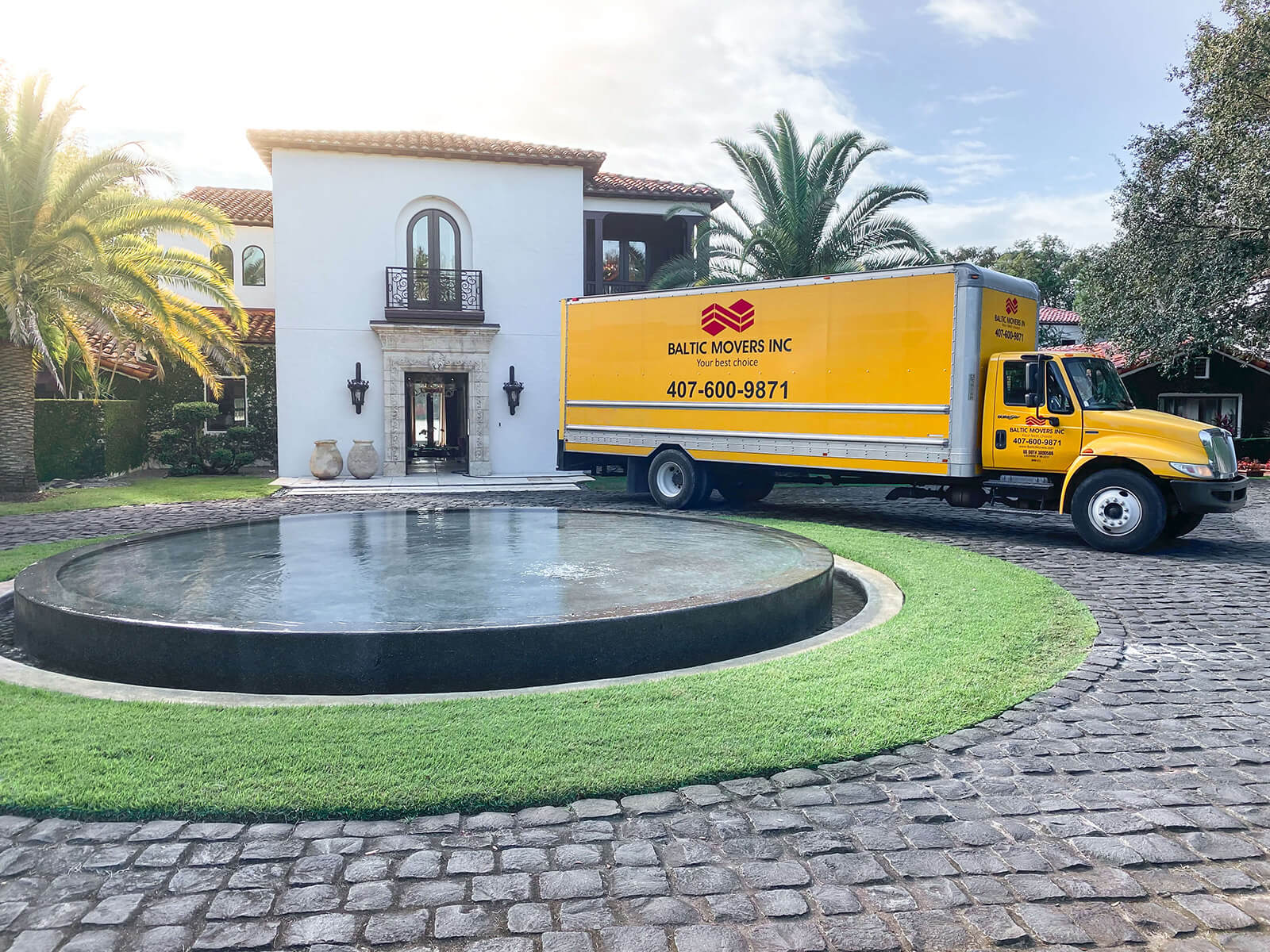
Relocating in the Orlando area and dreading the garage? Baltic Movers has handled everything from single-car workshops to full-blown hobbyist setups. We know how to transport heavy equipment safely, and we’ll treat your tools like they’re our own. Get a free quote at balticmovers.com and let’s get your workshop where it belongs.